China's elevator supply chain has really become a go-to source for buyers around the world. It’s supporting everything from high-rise residential towers and hospitals to hotels, factories, and transit hubs. You can now count on reliable suppliers offering tested systems, replacement parts, and even customized engineering support. But hey, don’t forget—price shouldn’t be the only thing guiding your purchasing decisions.
Dr. Albert So, a well-respected expert in elevator engineering, often reminds us that safety has to be the top priority in every step, whether it's designing or maintaining elevators. That’s so important when evaluating factories, checking certifications, inspecting records, or chatting with suppliers. Good suppliers should be transparent about load capacities, speeds, door sizes, control systems, and environmental limits. They should also share traceable drawings and clear installation instructions. Little details matter—a misfit door operator, for example, can cause noise, delays, and even the need for repeated service calls.
In this guide, we’ll look at some of China’s leading elevator manufacturers and see how suitable they are for international projects. Buyers often compare different parts—like elevator components, accessories, spare parts, or modernizations. Companies such as Canny Elevator, SJEC Corporation, Ningbo Xinda, and Suzhou Diao each have their own strengths. Some focus on complete elevator systems, while others specialize in traction machines, controllers, guide rails, or safety devices.
But, keep in mind, evaluating suppliers isn’t always straightforward. Looks on their product pages can be deceiving, and factory audits might reveal gaps you didn’t see online. Plus, response times after payment can vary quite a bit. So, it’s smart to ask for samples, production schedules, warranty details, and after-sales support info before sealing the deal. Doing your homework this way makes your project more predictable and safer in the long run. Mistakes can happen, of course, but thorough checks help minimize those risks—so don’t skip them.
All in all, taking a careful, detailed approach when choosing your supplier really pays off, especially for making sure the elevators are safe, reliable, and built to last.
Elevator Components: Definition, Scope, and Main Product Categories
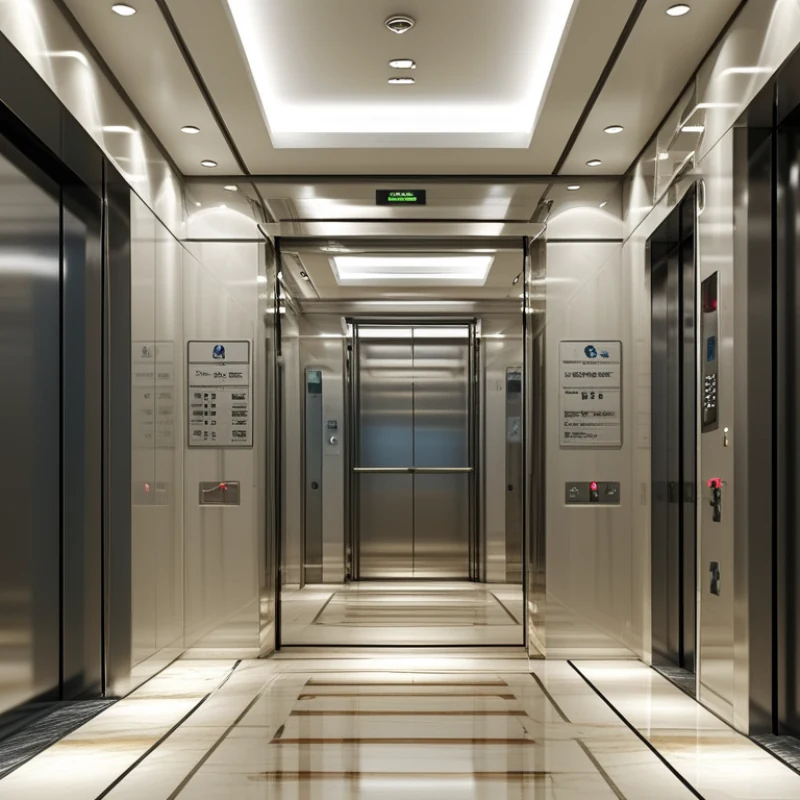
Elevator Components are the mechanical, electrical, and safety parts that make an elevator operate. Their scope covers the passenger cabin, hoisting system, control cabinet, landing doors, guide rails, and emergency equipment. Each part has a specific role, but performance depends on how these parts work together. A strong motor cannot correct poor alignment or weak door control.
The main product categories include traction machines, gearless or geared drives, controllers, door operators, ropes, sheaves, brakes, buffers, and car frames. Safety components include governors, safety gears, limit switches, and alarm systems. Interior items, such as handrails, flooring, lighting, and operating panels, also affect daily user experience. In supplier evaluations, buyers should check load ratings, material certificates, dimensional tolerances, testing records, and installation guidance. Small gaps matter. A guide shoe that wears early may create vibration, noise, and later maintenance costs.
Tips Match every component to the elevator’s speed, load, shaft size, climate, and duty cycle. Request drawings before ordering. Confirm packaging for moisture protection and inspect samples carefully. Local code review is essential, even when a component appears technically suitable. Specifications can still miss practical details, such as service access or replacement time. That is an area where suppliers and buyers should remain cautious. Reliable sourcing requires traceable documents, responsive technical support, and realistic delivery commitments.
China’s Role in the Global Elevator Components Market
China has become a central production base in the global elevator components market. China Elevator Association statistics reported for 2023 indicate more than 10 million elevators in service nationwide, with annual output near one million units. This large domestic base gives manufacturers practical experience with traction systems, controllers, door mechanisms, rails, and safety parts.
Export capability has also expanded. UN Comtrade data consistently lists China among the leading exporters of machinery and electrical equipment used in vertical transportation. For global buyers, this means broader sourcing options and shorter production cycles. Bucket Elevator Components, although used in industrial Lifting systems rather than passenger elevators, also benefit from China’s metalworking and precision-casting capacity. Samples often show detailed machining, clean welds, and standardized mounting holes.
Quality still requires close inspection. A factory certificate is not enough. Buyers should check material grades, load testing, traceability records, and compatibility with local codes such as EN 81 or ASME A17.1. The International Organization for Standardization also emphasizes safety and energy performance through ISO 25745. Some supplier catalogs remain difficult to compare. That is a weakness worth admitting. Independent testing, documented tolerances, and replacement-part planning usually reveal more than a low quotation.
Key Types of Chinese Elevator Component Suppliers
Chinese elevator component suppliers often fall into several practical groups. OEM factories produce traction machines, door operators, controllers, guide rails, and safety parts at scale. Their strengths include process control, repeatable dimensions, and testing records. Factory visits can reveal more than catalogues. Look for calibrated gauges, traceability labels, and load-test areas. Small details matter.
Specialized manufacturers focus on one technical field, such as car doors, ropes, buffers, or control cabinets. They may offer deeper engineering support and faster design changes.
Customization workshops handle unusual shaft sizes, finishes, and replacement parts. Their flexibility helps during renovation projects, but drawings must be checked carefully. A low price can hide costly revisions.
Engineering suppliers and system integrators combine components from several factories. They can coordinate compatibility, documentation, and shipment schedules. This suits buyers who need one technical contact. Yet responsibility may become blurred when a fault appears. Ask who approves the final interface.
Export-oriented trading suppliers manage sourcing, inspection, packing, and multilingual communication. They can help with smaller orders or mixed containers. Reliable partners provide test reports, material certificates, installation instructions, and clear warranty terms.
Buyers should verify whether documents match the actual production site. I have found that quick replies do not prove technical ability. A supplier may answer perfectly and still miss a tolerance. Samples, independent inspection, and staged payments reduce uncertainty. The right choice depends on lift duty, local codes, service expectations, and inspection capacity.
How to Evaluate Supplier Quality, Compliance, and Production Capacity
Choosing China’s top elevator component suppliers requires more than comparing prices or viewing polished factory photos. A reliable buyer checks quality systems, technical records, and production evidence. Request ISO 9001 certification, material certificates, inspection plans, and sample test reports. For safety-related parts, confirm whether products meet relevant standards, such as EN 81 or ASME A17.1/CSA B44, for the target market. Certificates should be verifiable and match the exact product model.
Visit the factory, or arrange an independent audit. Watch how workers measure guide rails, test door operators, and label finished parts. Ask how nonconforming products are isolated. Trace one batch from raw material to packing. A supplier with clear records can usually explain this process without hesitation. It is also useful to inspect calibration labels on testing equipment. Expired instruments create quiet risks.
Production capacity needs practical proof, not a large monthly figure in a presentation. Review equipment lists, shift schedules, current orders, and recent delivery performance. Ask for a production plan covering peak demand, spare parts, and corrective actions. A capable supplier should identify bottlenecks before signing a contract. Still, audits are imperfect. A short visit may miss seasonal pressure or subcontracting. Build in pre-shipment inspections, approved samples, and measurable acceptance criteria. Small details matter.
China Top Elevator Components Suppliers for Global Buyers - How to Evaluate Supplier Quality, Compliance, and Production Capacity
| Evaluation Dimension | Key Metric or Requirement | Practical Benchmark for Supplier Screening | Documents or Evidence to Request | Why It Matters to Global Buyers |
|---|---|---|---|---|
| Quality Management | Quality management system | Current ISO 9001 certification covering the relevant manufacturing site and product scope | Certificate number, scope, issuing body, expiry date, audit status, and certification verification record | Shows that documented processes exist for design, purchasing, production, inspection, and corrective action. |
| Product Safety Compliance | Applicable elevator safety standards | Test reports and technical files aligned with the destination market, such as EN 81-20 and EN 81-50, ASME A17.1/CSA B44, or applicable local standards | Accredited laboratory reports, conformity assessments, technical drawings, risk assessments, and declarations of conformity | Elevator components are safety-critical and may require market-specific approval before installation or shipment. |
| Material Traceability | Traceability from raw material to finished component | Lot or batch identification for steel, castings, electrical parts, safety components, and finished products | Material certificates, heat numbers, incoming inspection records, production batch records, and labeling photographs | Supports root-cause analysis, warranty handling, recalls, and regulatory investigations. |
| Incoming Material Control | Inspection coverage for purchased materials and parts | Documented inspection plans with defined sampling, acceptance criteria, and supplier approval procedures | Incoming inspection reports, approved supplier list, nonconformance records, and calibration records | Many component failures originate from uncontrolled purchased materials or inconsistent sub-suppliers. |
| Process Control | Critical manufacturing process controls | Approved work instructions, first-article approval, in-process inspection, and control plans for critical dimensions and safety functions | Process flow charts, control plans, work instructions, first-article reports, and process audit results | Reduces dimensional variation and prevents defects from being discovered only after installation. |
| Final Inspection | Inspection and test completion before shipment | 100% functional testing for safety-related items where required, plus documented dimensional and visual inspection | Final inspection reports, functional test records, inspection photographs, release approvals, and packing lists | Provides objective evidence that the shipped batch conforms to the approved specification. |
| Testing Capability | Availability of calibrated test equipment | In-house or qualified third-party capability for dimensional, electrical, load, endurance, insulation, and functional testing as applicable | Equipment list, calibration certificates traceable to recognized national or international standards, and test methods | Reliable measurement is essential for validating safety margins and repeatable product performance. |
| Electrical and EMC Compliance | Electrical safety and electromagnetic compatibility | Applicable testing for insulation, dielectric strength, grounding, ingress protection, and EMC based on the product and destination market | Electrical test reports, EMC reports, wiring diagrams, component ratings, and IP test evidence where relevant | Helps prevent electrical hazards, control-system interference, and failures caused by unsuitable installation environments. |
| Environmental Compliance | Restricted substances and chemical compliance | Material declarations or laboratory evidence addressing applicable requirements such as RoHS and REACH | RoHS test reports, REACH declarations, supplier material declarations, and substance control procedures | Required documentation may be necessary for customs clearance, public projects, and customer environmental policies. |
| Production Capacity | Available capacity for the buyer’s forecast | Normal monthly capacity should exceed the forecasted demand by approximately 20–30% to absorb peaks, maintenance, and quality holds | Capacity statement, machine list, shift schedule, historical monthly output, and current loading percentage | A capacity buffer reduces late deliveries and limits dependence on overtime or uncontrolled outsourcing. |
| Manufacturing Equipment | Equipment suitability and redundancy | Core processes should have suitable equipment, preventive maintenance, and contingency arrangements for critical machines | Machine inventory, maintenance logs, capability studies, production photographs, and backup-process plan | Improves delivery continuity and helps maintain consistent tolerances across production batches. |
| Capacity Planning | Lead-time reliability | Supplier should provide a written lead-time commitment, production schedule, and escalation process for delays | Recent delivery performance, production planning records, order backlog, and on-time delivery data | Reliable lead times are critical when components must be synchronized with construction and installation schedules. |
| Engineering Capability | Design support and customization | Dedicated technical personnel able to review drawings, manage revisions, and support installation or troubleshooting | Engineering organization chart, sample drawings, revision-control procedure, and engineering change records | Reduces integration errors when adapting components to different shaft layouts, controls, and local requirements. |
| Nonconformance Management | Corrective and preventive action | Documented root-cause analysis with corrective action, responsibility, due date, and effectiveness verification | Anonymized 8D reports, rejection trends, customer complaint records, and corrective-action closure data | A mature response process prevents repeated defects and demonstrates accountability after delivery. |
| Packaging and Logistics | Protection during international transport | Moisture protection, corrosion prevention, shock protection, clear labeling, and export packaging suitable for the transport mode | Packaging specifications, packing photographs, drop or vibration test evidence where applicable, and shipping labels | Prevents transit damage, missing parts, corrosion, and identification errors at the installation site. |
| Supply Chain Resilience | Dependence on critical sub-suppliers | Identified alternatives for critical materials and components, with change-control approval before substitution | Business continuity plan, approved sub-supplier list, safety-stock policy, and material substitution procedure | Limits disruption from shortages, transport interruptions, or sudden changes in material availability. |
| Factory Audit Readiness | Transparency of operations | Willingness to support an on-site or remote audit covering production, testing, storage, and document control | Audit agenda, facility layout, production-line access, anonymized records, and management review outputs | Direct verification is more reliable than relying only on brochures, certificates, or self-declared capacity. |
| After-Sales Support | Warranty and technical response | Written warranty terms, defined response times, spare-parts policy, and multilingual technical documentation | Warranty policy, service-level agreement, spare-parts list, installation manuals, and troubleshooting procedures | Fast technical support can reduce installation delays, downtime, and total lifecycle cost. |
| Commercial and Compliance Risk | Contractual control and documentation accuracy | Clear specifications, change-approval rules, inspection rights, Incoterms, warranty obligations, and dispute procedures | Signed technical agreement, quality agreement, commercial contract, pro forma invoice, and export documentation samples | Reduces misunderstandings regarding product scope, acceptance criteria, responsibility, and delivery risk. |
Note: Benchmarks are practical supplier-screening guidelines. The final compliance requirements depend on the component type, elevator system design, installation environment, and destination-market regulations.
Sourcing Process: From Supplier Research to Contract Negotiation
China Top Elevator Components Suppliers for Global Buyers
Sourcing starts with evidence, not attractive catalog photos. The International Energy Agency reports that buildings consume about 30% of global final energy. This makes efficient motors, controllers, doors, and Hydraulic Elevator Components important purchasing criteria. The Global Elevator and Escalator Market reports also forecast steady growth, supported by urbanization and modernization projects. However, market forecasts differ. Treat them as direction, not proof.
Create a supplier shortlist using production capacity, quality certifications, export experience, and documented test results. Request drawings, material grades, tolerance data, and a sample inspection plan. A real factory should explain how it controls noise, vibration, corrosion, and emergency performance. Ask for traceability from raw material to packed component. Visit the facility when order value justifies the cost. A video call helps, but it cannot reveal every process weakness.
Negotiation should connect price with measurable obligations. Define acceptance criteria, inspection points, packaging strength, spare-part availability, and response times for defects. Confirm Incoterms, payment milestones, delivery penalties, and warranty boundaries in the contract. The International Organization for Standardization’s quality principles support documented processes and continual improvement. Still, certificates alone are not enough. I once underestimated packaging risks; several metal surfaces arrived scratched after long sea transit. The supplier was not solely responsible. My specification was incomplete. Include photos, humidity protection, and loading instructions before signing.
Export Logistics, Documentation, and After-Sales Support for Global Buyers
For global buyers, elevator components are judged by delivery discipline, not factory promises alone. The UNCTAD Review of Maritime Transport 2024 states that over 80% of world trade by volume moves by sea. That makes export planning essential for Elevator Door Components, especially when one missing panel delays an entire installation.
Reliable suppliers prepare commercial invoices, packing lists, certificates of origin, and technical datasheets before cargo leaves the warehouse. Each wooden case should show gross weight, dimensions, lifting points, and the matching purchase-order line. Photos of sealed cartons help buyers verify loading conditions. The 2023 World Bank Logistics Performance Index evaluates customs, infrastructure, shipment quality, and tracking. These measures expose weak handovers quickly. A low-cost shipment can become expensive after demurrage or document correction.
After-sales support should remain practical. Buyers need installation drawings, wiring details, spare-part identification, and a named technical contact. A response within one working day is useful, but not always enough. Complex door faults may require videos, measurements, and controller information. Suppliers should record batch numbers and recommend a small reserve of rollers, sensors, and fasteners. Standards such as ISO 8100-1 and ISO 8100-2 provide a technical reference, yet local approval requirements still differ. We have seen technically correct documents fail because translations were unclear. That mistake deserves review before dispatch.
China Top Elevator Components Suppliers for Global Buyers
Export logistics, documentation, and after-sales support are strongly influenced by the selected Incoterm. The chart compares seller-arranged responsibilities under four commonly used Incoterms 2020.
| Incoterm | Export clearance | Main carriage arranged by seller | Cargo insurance arranged by seller | Import clearance |
|---|---|---|---|---|
| EXW | 0 | 0 | 0 | 0 |
| FOB | 1 | 0 | 0 | 0 |
| CIF | 1 | 1 | 1 | 0 |
| DDP | 1 | 1 | 0 | 1 |
A value of 1 means the seller has the corresponding obligation under Incoterms 2020; 0 means the obligation generally belongs to the buyer. FOB and CIF apply to sea or inland waterway transport. Incoterms define delivery responsibilities and do not replace a supplier’s separate warranty or after-sales agreement.
Source: International Chamber of Commerce, Incoterms® 2020 rules.
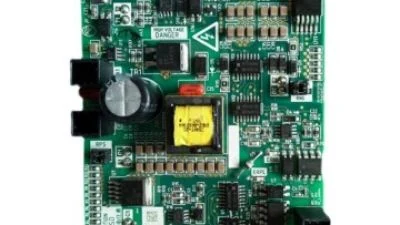
Mitsubishi Elevator IGBT Drive Module Board Guide: P203777B000G01, CM150DX-24S, CM200DX-24S & CM300DX-24S
A drive module board identified as P203777B000G01 is designed to coordinate switching, protection, and control signals in elevator traction systems. Its compatibility with the CM150DX-24S, CM200DX-24S, and CM300DX-24S IGBT modules provides three current-capacity options for different motor ratings and load requirements. These 24S modules are generally associated with a 1,200 V class, while their 150 A, 200 A, and 300 A ratings help engineers select an appropriate margin for acceleration, regenerative braking, and peak hoisting loads. Before replacement, technicians should confirm gate-drive voltage, terminal configuration, thermal interface condition, braking resistor specifications, and the board’s fault-feedback circuit.
Energy efficiency is increasingly important in vertical-transport equipment. The *2023 Global Status Report for Buildings and Construction* from UNEP reports that buildings account for approximately 30% of global final energy consumption, making efficient motor control a practical engineering priority. A correctly matched IGBT module can reduce switching losses, improve torque regulation, and support smoother elevator starts and stops. The CM150DX-24S is suitable for lower-capacity applications, while the CM200DX-24S and CM300DX-24S offer greater current headroom for heavier cars or demanding duty cycles. Maintenance teams should use insulated tools, follow discharge procedures, and compare measured gate-emitter resistance and collector-emitter behavior with the authorized technical datasheet before energizing the drive.
FAQS
China has more than 10 million elevators in service. Annual output approaches one million units. This creates strong manufacturing experience. Buyers also gain broader sourcing options and shorter production cycles.
Common products include traction systems, controllers, doors, rails, safety parts, and hydraulic components. Industrial lifting systems may use bucket components instead. Samples should show clean welds and precise mounting holes.
Review production capacity, export experience, test reports, and quality procedures. Request drawings, material grades, tolerances, and inspection plans. A video call helps. It cannot reveal every weakness.
No. Certificates can look reassuring. Buyers should verify material grades, load testing, traceability, and code compatibility. Independent testing often provides stronger evidence. Low prices can hide replacement problems later.
Define acceptance criteria, inspection points, packaging strength, spare-part availability, and defect response times. Confirm payment milestones, delivery terms, penalties, and warranty limits. Put measurable duties in the contract.
Specify protective materials, humidity control, loading instructions, and case labeling. Each case should show weight, dimensions, lifting points, and its purchase-order line. I once underestimated packaging risks. My specification was incomplete.
Suppliers should prepare invoices, packing lists, certificates of origin, and technical datasheets. Photos of sealed cartons can confirm loading conditions. Missing documents may cause customs delays or extra storage charges.
Buyers need installation drawings, wiring details, spare-part identification, and a named technical contact. Suppliers should record batch numbers and recommend reserve parts. Rollers, sensors, and fasteners are practical examples.
Check local safety codes before production begins. Confirm translations, drawings, and technical data with the approval team. International standards offer useful references. They do not replace local requirements. Mistakes still happen.
Conclusion
This guide provides a practical overview of Elevator Components, covering their definition, scope, and main product categories, including traction and control systems, doors, safety devices, guide components, electrical parts, and interior fittings. It explains China’s growing role in the global elevator components market and introduces different types of Chinese suppliers, from specialized manufacturers to integrated producers and trading companies. Global buyers can use this framework to understand supplier capabilities and identify suitable sourcing options.
The article also outlines how to evaluate product quality, regulatory compliance, technical documentation, production capacity, and quality-control systems. It follows the sourcing process from supplier research and quotation comparison to sample testing, contract negotiation, and order confirmation. In addition, it highlights essential considerations for export logistics, shipping documents, packaging, installation guidance, warranty terms, spare-parts availability, and after-sales support, helping international buyers build reliable and efficient supply relationships.
Related Posts
-
Best Elevator Components for Global Buyers Top Quality Options?
-

How the Best Elevator Components Enhance Safety and Efficiency in High-Rise Building Applications
-
Exploring Unique Examples of Innovative Elevator Components and Their Impact
-

7 Amazing Facts About Elevator Components You Didnt Know
-
Understanding the Essential Role of Elevator Components in Modern Building Infrastructure
-
Top 10 Elevator Components Every Buyer Should Know?